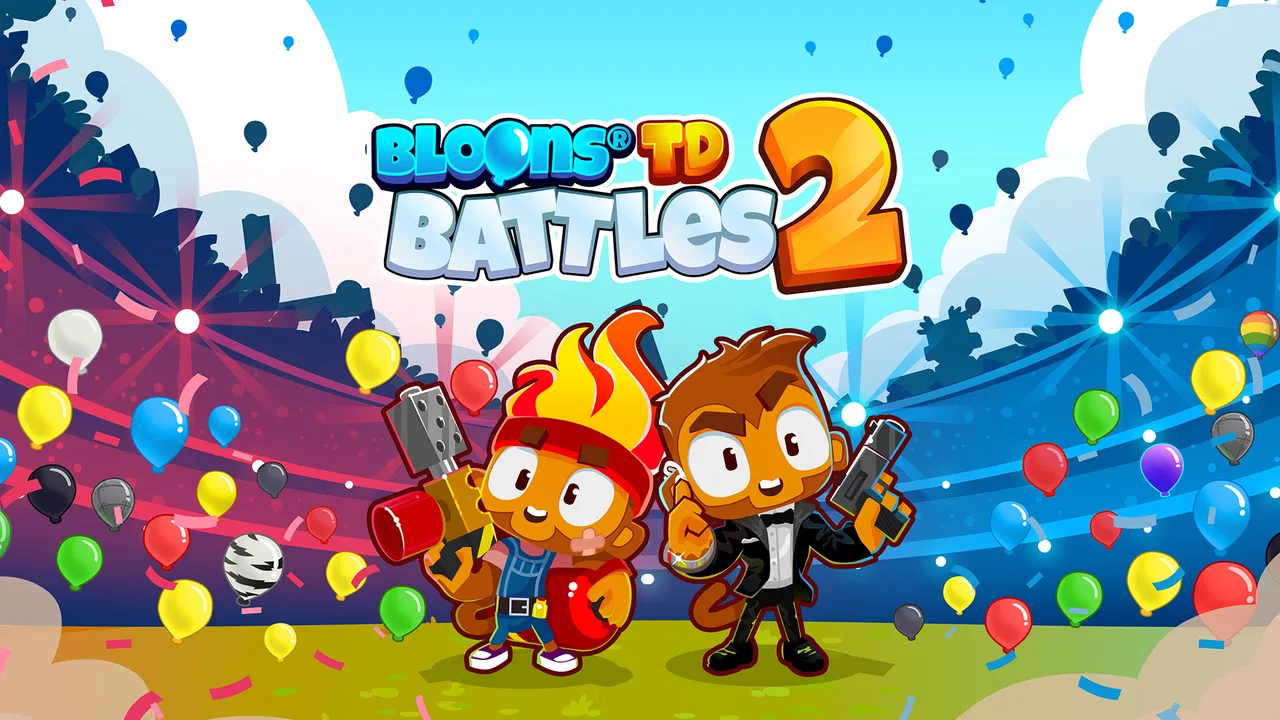
Bloons TD Battles 2
- 4.0
- Rating
- 10.00M
- Installs
- Free
- Price

 Analysis by App-foxy
Bloons TD Battles 2 is a competitive strategy game that turns tower defense into a direct contest rather than a purely solo puzzle. I spent time learning its rhythm, testing different defensive ideas, and paying attention to what kept me playing after the first few matches. My first impression was that it looks approachable because the basic objective is easy to understand: build a defense, send pressure, and react before the other player does. The interesting part arrives when every purchase has a cost and every attack can reveal a weakness in your plan.
That makes this a very different experience from a traditional tower-defense campaign. You are not simply trying to survive a fixed sequence designed by the game. You are watching another person make decisions, guessing what they may do next, and adjusting your own economy and defense at the same time. The best matches feel like a conversation made out of timing, placement, and calculated risk. I would recommend it to players who enjoy strategy with a competitive edge, but I would not suggest it to anyone looking for a relaxed game where progress depends only on their own pace.
How the early matches teach the real game
The opening hours are built around a simple goal: understand how to stay alive while creating enough pressure to force difficult choices from the opponent. At first, it is tempting to treat each round as a straightforward construction exercise. I quickly found that this approach is too passive. A defense can look comfortable and still be vulnerable if it leaves no room to respond to a sudden change in the match.
You May Also Like

 Blood Strike: 2.5 Anniversary
Blood Strike’s Loadouts Turn Every Drop Into a Tactical Gamble
A close look at Blood Strike’s custom loadouts: how fast access to signature weapons reshapes its battle royale rhythm, rewards preparation, and narrows the gap between fights.

 Pandora - Music & Podcasts
Pandora’s Music Is Easy to Start, but Harder to Recover
Pandora’s strength is its low-effort path from a seed to a station. Its weak spot is how much confidence it asks you to place in connection, setup, and quiet recovery.

 8 Ball Pool
 Is Built on Rivalries, Rematches, and Routine
A close look at the rivalries, rematches, shared routines, and unanswered safety questions that turn a quick pool match into a persistent mobile community.

 Samsung Music
’s Quiet Strength Is Playing What You Already Own
Its reach comes less from spectacle than from dependable access to a personal library. That simplicity is both the app’s strongest retention engine and its ceiling.

 AccuWeather: Weather Radar
AccuWeather Review: A Quick, Clear Forecast for Everyday Decisions
For everyday plans, the best forecast is the one you can understand quickly. AccuWeather makes rain timing, radar, and local conditions easy to act on, with a few trade-offs.

 Hill Climb Racing
Why Hill Climb Racing Still Turns Crashes Into One More Run
A tiny car, a bumpy hill and one more upgrade: Hill Climb Racing keeps resurfacing because its simple chaos makes every near-miss feel personal.
More From Our News Desk



My early progress came less from memorizing a perfect setup and more from learning what each purchase was supposed to accomplish. Some choices help stabilize the immediate danger, while others are investments that matter later. Spending everything on short-term safety can leave me unable to answer the next threat. Saving too aggressively can create a gap that the opponent exploits before the long-term plan becomes useful. That tension gives even the first matches a meaningful objective beyond simply placing towers.
The game is free to start, which makes experimenting easier for newcomers. It is also rated Everyone, so the presentation is accessible to a broad audience. Still, “accessible” does not mean effortless. The controls are easy to grasp, but the consequences of a bad decision can arrive quickly. I found that new players should focus on recognizing why a defense failed instead of immediately copying a different arrangement. That habit is more useful than chasing a single setup without understanding its purpose.
One practical routine helped me improve: after each loss, I identified the first moment when my plan became difficult to repair. Sometimes the problem was an underdeveloped defense; sometimes I had spent resources too early; sometimes I had reacted to pressure that was not actually dangerous. This small review process turned losses into specific lessons. Without it, the game can feel like a sequence of unpredictable defeats, especially when facing someone with more experience.
Small decisions create visible progress
The most satisfying progress signal is not simply winning. It is noticing that I can now read a match earlier than before. I began to recognize when I was overbuilding, when I needed to preserve flexibility, and when an opponent was testing my response rather than committing to a full attack. Those improvements are easy to miss because they do not always produce an immediate victory, but they make later matches feel more deliberate.
Unlocks and new tactical possibilities also give the game a reason to keep returning. I enjoyed having a clear reason to test another approach instead of repeating the same opening every time. The important trade-off is that progression can make the game feel more inviting while also increasing the amount a new player needs to learn. A growing collection of options is exciting when I understand their roles; it becomes noise when I am still unsure which weakness I am trying to solve.
For that reason, I recommend setting narrow personal goals. Rather than trying to master everything at once, I might play several matches concentrating on economy, then switch to improving defensive timing, then examine how well I handle late pressure. This approach makes the progression easier to feel. It also prevents the common mistake of changing every part of a strategy after one loss, which makes it impossible to tell what actually improved.
The game has a large audience, with over five million installs and an average rating of 4.1 from around 84 thousand ratings. Those figures suggest that the competitive format has found a substantial player base, but they should not be mistaken for a guarantee that every match will suit every newcomer. The experience is strongest for people willing to learn through repetition. If I only want occasional tower defense without studying opponents or refining decisions, the broader appeal matters less.
The difficulty curve rewards reading, not just speed
The difficulty curve feels unusual because it is shaped by human behavior as much as by the game itself. A match against a cautious player can give me time to build a plan, while an aggressive opponent can expose weaknesses before I feel ready. This variety keeps the early rounds from becoming completely automatic, but it also creates a sharp learning curve. A player may understand the controls and still lose because they have not learned how to interpret the opponent’s intentions.
I found that the strongest defensive habit is leaving myself a response option. A plan that uses every resource immediately may look powerful, but it can become brittle. Keeping some flexibility lets me react when the opponent changes direction. This is one of the less obvious lessons of the game: the most impressive board is not always the safest one. A modest defense with room to adapt can outperform a stronger-looking arrangement that has no answer to a new threat.
Timing matters just as much as raw strength. Sending pressure at the wrong moment can weaken my own position, while waiting too long can give the opponent time to prepare. I learned to think of attacks as tests. If a small push reveals that the other player must spend heavily to respond, it may be worthwhile even when it does not immediately end the match. If it tells me nothing and leaves my own economy damaged, repeating it is usually a poor habit.
That makes the game more mentally demanding than many familiar tower-defense alternatives. In a solo campaign, I can pause, retry a stage, or follow a predictable pattern until I succeed. Here, the opponent is actively adapting, so a solution that worked a moment ago may become a liability. Players who prefer fixed levels and complete control over the challenge may find this frustrating. Players who enjoy reading an evolving situation will probably find the same uncertainty compelling.
There is also a pacing trade-off. Early decisions can feel calm, but they establish the conditions for a much more pressured later phase. I liked that the match does not require constant frantic input from the beginning. At the same time, the quieter opening can tempt new players into treating it as downtime. It is not. The early phase is where I decide whether I will have enough room to handle the demands that arrive later.
Why the competitive loop keeps pulling me back
The retention strength comes from the gap between knowing the rules and consistently making good decisions. After a loss, I often understood what went wrong but still wanted another attempt because the mistake felt correctable. That is a healthy kind of frustration. The game gives me enough information to believe that better preparation or timing could change the result, rather than making every outcome feel random.
However, that same loop can create pressure. Competitive games naturally encourage “one more match,” especially after a defeat that feels close. I had to be careful not to keep playing while annoyed, because frustration made me spend resources reactively and abandon plans too quickly. A short break is genuinely useful here. Returning with a clear head improves decision-making more than forcing several tired matches in a row.
In-app purchases range from $0.99 to $49.99 per item. I would advise new players to judge the game first by its core competition rather than by the temptation to accelerate or expand their experience through purchases. The free entry point is enough to discover whether the decision-making loop appeals to you. If the strategy itself does not feel satisfying, spending more will not solve that problem. If you already enjoy the game, it is still worth deciding in advance what you are comfortable spending instead of letting competitive momentum make that choice for you.
Another source of retention is experimentation. I enjoyed returning with a different idea, not because every idea was equally strong, but because each one exposed another part of the match. A defensive plan may work well against one style and struggle against another. This encourages flexible thinking, although it can also make the game feel demanding for players who want a single dependable build. I would skip it if I dislike adapting my approach or if losing to an unfamiliar strategy feels more irritating than interesting.
The developer, ninja kiwi, has clearly positioned the game around competitive tower defense rather than a quiet single-player progression path. That focus explains both its appeal and its limitations. The game is at its best when I am actively comparing choices with another player. It is less suitable as a background activity, a purely casual time filler, or a game I expect to master without repeated practice.
Where it fits beside other tower-defense games
Compared with conventional tower-defense games, this one gives the opponent a much larger role in the experience. A standard campaign usually asks me to solve a level’s threats in the intended order. Here, I must solve the opponent’s choices as well as the game’s escalating pressure. That creates more replay value, but it removes some of the comfort that comes from learning a stage once and then executing a reliable answer.
Compared with other competitive strategy games, the tower-defense foundation keeps the action readable. I can see the relationship between preparation and survival more clearly than in a game where many hidden variables influence the outcome. The downside is that small mistakes can feel especially visible. When my defense fails, I can often trace the problem back to a purchase, a delay, or an incorrect assumption. I appreciate that clarity, although it can be uncomfortable when I want a forgiving experience.
It also differs from a purely asynchronous strategy game because the pressure is concentrated into a match. I do not need to manage a long list of distant tasks to feel that I am progressing, but I do need to stay engaged while the contest develops. That makes it a good choice for a focused session and a weaker choice for someone who wants to check in briefly without committing attention.
For an everyday example, I can imagine playing during a commute or while waiting for an appointment, provided I have enough uninterrupted time to finish a match. I would not start one just before an important call or when I know I may need to put the phone down suddenly. The early phase can seem manageable, but the later decisions deserve concentration. A dropped or distracted session is more likely to feel stressful than relaxing.
Practical advice for new players
My first recommendation is to learn the purpose of a strategy before trying to improve its speed. Ask whether a purchase is protecting the present, preparing for later danger, or creating pressure. If it does none of those things, it may be unnecessary. This simple question helped me avoid filling the board with choices that looked useful individually but worked poorly together.
Second, treat the opening as preparation rather than a race to spend. I had better results when I preserved enough options to respond to the opponent. That does not mean playing passively. It means making pressure and defense support each other instead of sacrificing one completely for the other.
Third, change one major variable at a time when testing a new plan. If I alter placement, spending order, and attack timing simultaneously, a win or loss tells me very little. Testing in a controlled way makes the progression feel more meaningful and helps reveal which decision is carrying the strategy.
Finally, pay attention to the moment a match becomes difficult, not only to the final result. If I lose much later than usual, that may still represent progress because the early plan held together. If I win while feeling completely unable to explain why, I should not assume the strategy is reliable. The game rewards understanding more than lucky repetition.
My verdict on the long-term progression
Bloons TD Battles 2 sustains play through a strong combination of early goals, visible improvement, and competitive uncertainty. I always have something concrete to work on: better preparation, cleaner timing, more disciplined spending, or a smarter response to a familiar kind of pressure. The progression feels most rewarding when I use it to expand my understanding rather than simply collect more options.
There are real frictions. The learning curve can be steep, losses may arrive before I understand the reason, and the competitive loop can encourage me to play longer than planned. The free-to-play structure also deserves attention, especially for anyone who prefers a completely fixed-cost experience. These issues do not ruin the game, but they make it important to approach it with the right expectations.
The current version is 4.11.0, and the game requires Android 6.0 or later. Those practical details make it easy for many Android players to try, but compatibility alone is not the deciding factor. My main question would be whether you enjoy learning from opponents and making decisions under pressure. If the answer is yes, this is one of the more engaging ways to turn tower defense into a competitive habit.
My final recommendation is straightforward: try it if you want a strategy game where every match asks you to balance safety, pressure, and adaptation. Skip it if you want a slow solo campaign, a predictable difficulty curve, or progress that never depends on another player’s choices. I came away feeling that the game earns its replay value not through empty repetition, but through the promise that the next match can be better because I finally understood the decision that cost me the last one. That makes it a worthwhile free strategy download for patient players who enjoy turning mistakes into a sharper plan.
FAQs for Bloons TD Battles 2
01What is Bloons TD Battles 2?
Bloons TD Battles 2 is a competitive tower defense game where players battle against each other by building and upgrading towers to pop incoming bloons. Unlike traditional tower defense games, it features a head-to-head multiplayer mode, allowing players to send bloons to their opponent’s side while defending their own.
02Is Bloons TD Battles 2 free to play?
Yes, Bloons TD Battles 2 is free to download and play on both Android and iOS devices. However, it does offer in-app purchases that can enhance gameplay, such as new towers, skins, and other items. These purchases are optional and not necessary to enjoy the game.
03What are the system requirements for Bloons TD Battles 2?
Bloons TD Battles 2 requires a device running Android 5.0 or later, or iOS 11.0 or later. It is recommended to have a device with at least 2GB of RAM for optimal performance. Make sure your device has sufficient storage space for downloading and installing updates.
04Can I play Bloons TD Battles 2 offline?
No, Bloons TD Battles 2 requires an internet connection to play as it focuses on real-time multiplayer battles. Players need to be online to match up with opponents and participate in competitive gameplay. Ensure a stable internet connection for the best experience.
05What new features are available in Bloons TD Battles 2 compared to the original?
Bloons TD Battles 2 introduces several new features, including enhanced graphics, new arenas, and a variety of new bloons and towers. The game also offers an improved matchmaking system and ranked battles, allowing players to compete against others of similar skill levels. These updates make for a more dynamic and engaging experience.
Pros
- Engaging multiplayer battles.
- Wide variety of tower upgrades.
- Regular updates with new content.
- Intuitive controls and interface.
- Strategic gameplay keeps it interesting.
Cons
- In-app purchases can be pricey.
- Matchmaking can be unbalanced.
- Requires constant internet connection.
- Some features locked behind paywall.
- Occasional lag during matches.

Bloons TD Battles 2
Gallery